Fire-Safe Balcony Systems: Why Non-Combustible Materials Matter Post-Grenfell
The UK construction industry has undergone significant regulatory transformation in recent years, driven by the Hackitt Report and subsequent Building Safety legislation. The Hackitt Report (“Building a Safer Future: Independent Review of Building Regulations and Fire Safety“) identified critical gaps in building safety standards and recommended comprehensive reforms to ensure that buildings are designed, constructed, and maintained to the highest safety standards.
One of the most significant outcomes of these regulatory changes is the emphasis on non-combustible materials for external walls and balcony systems in high-rise residential buildings. For balcony systems specifically, the shift towards non-combustible materials is no longer optional, it is a regulatory imperative. This article explores why non-combustible materials matter, how fire-safe balcony systems protect residents, and what building owners, developers, and specifiers need to know to ensure compliance and safety.

Understanding Non-Combustible Materials
Before exploring fire-safe balcony systems, it is important to understand what “non-combustible” actually means. A non-combustible material is one that does not readily catch fire or contribute significantly to the spread of fire. In the context of balcony systems, this means using materials that will not ignite or propagate flames, even when exposed to extreme heat.
The Science Behind Non-Combustibility
Non-combustibility is determined through rigorous testing protocols. In the UK and Europe, materials are classified using the Euroclass system, which categorises building materials based on their fire behaviour. The highest classification is A2-s1, d0, which indicates that a material is non-combustible and produces minimal smoke and flaming droplets when exposed to fire.
To achieve A2-s1, d0 classification, materials must pass stringent fire tests including:
- PCS (Gross Calorific Potential) – Limited to 3.0 MJ/m². This measures how much energy the material can release when burned. The lower the PCS, the less fuel the material provides to a fire.
- FIGRA (Fire Growth Rate) – Limited to 120 W/s. This measures how quickly a fire spreads across the material’s surface. A low FIGRA means the fire spreads slowly, giving occupants more time to evacuate.
- LFS (Lateral Flame Spread) – Must not reach the specimen edge. This measures how far flames travel horizontally across the material. For A2-s1, d0 materials, flames must not reach the edge of the test specimen, indicating the material will not propagate fire.
- THR600s (Total Heat Released) – Limited to 7.5 MJ. This measures the total energy released during the first 600 seconds of the fire test. A low THR600s means the material contributes minimally to the overall heat of a fire.
These tests simulate real-world fire conditions and ensure that materials will not contribute to rapid fire spread or excessive heat release. Aluminium, the core material in AliDeck balcony systems, naturally meets these stringent requirements and achieves A2-s1, d0 classification.
Why Non-Combustible Materials Matter Beyond Compliance
Whilst regulatory compliance is essential, the case for non-combustible materials extends far beyond meeting minimum standards. Non-combustible balcony systems provide genuine peace of mind for residents, particularly in multi-storey buildings where evacuation can be challenging and fire spread can be catastrophic.
Consider the practical implications: in a fire scenario, a non-combustible balcony system will not ignite, will not propagate flames, and will not release toxic fumes. For residents on upper floors, this can mean the difference between a safe evacuation and a life-threatening situation. For firefighters, it means they can focus on evacuation and suppression rather than managing rapid fire spread through combustible balcony systems.
The Regulatory Landscape: Hackitt Report and Building Safety Legislation
The Hackitt Report led to a comprehensive overhaul of fire safety regulations in the UK. Understanding this regulatory landscape is critical for anyone involved in high-rise residential construction.
The Building Safety Act and High-Rise Regulations
The Building Safety Act 2022 introduced new regulatory requirements for high-rise residential buildings (7+ storeys or 18+ metres). These regulations established a new regulatory regime overseen by the Building Safety Regulator and introduced mandatory involvement of a Building Safety Regulator during the design, construction, and occupation phases of relevant projects.
For balcony drainage, the Building Safety Act reinforces the requirement for non-combustible materials. Specifically, Regulation 7(2) of the Building Regulations 2016 (as amended) states that materials used in the external walls of certain buildings must be of European classification A2-s1, d0 or A1.
PAS 9980:2022 – The Code of Practice for Balconies
PAS 9980:2022 is the British Standards Institution’s Code of Practice for fire risk appraisal and assessment of external wall construction, including balconies, in multi-storey residential buildings. Published in 2022 in response to regulatory changes and industry feedback, PAS 9980 provides comprehensive guidance on fire risk assessment, materials, and installation practices.
The standard emphasises non-combustible materials and addresses critical safety concerns including fire performance, structural integrity, drainage, and thermal bridging. PAS 9980 is widely referenced in tender documents and building control submissions, and compliance with the standard is increasingly expected by developers, architects, and building control bodies.
AliDeck’s aluminium balcony systems are fully compliant with PAS 9980:2022. Our products meet the standard’s stringent material specifications, and our technical documentation provides the detailed evidence required for compliance verification. We will be publishing a comprehensive guide to PAS 9980 compliance soon, which will provide deeper insights into the standard and how it applies to balcony design.
NHBC Standards and Fire Safety Requirements
The National House Building Council (NHBC) Standards provide detailed technical guidance for house builders and developers. NHBC Chapter 7.1 addresses balconies and external terraces, setting out requirements for drainage, structural support, and material selection.
NHBC standards explicitly require that balcony materials meet fire safety requirements. For new build projects, NHBC standards are often the baseline compliance requirement, and many developers reference NHBC standards in their tender documents. AliDeck systems exceed NHBC requirements across all key areas, including fire performance, drainage, and structural support.
The 2029 Compliance Deadline
A critical regulatory deadline is 2029, by which time all relevant buildings must be brought into compliance with new fire safety standards. This deadline applies to high-rise residential buildings (7+ storeys or 18+ metres) and has created significant demand for remediation and retrofitting services.
For building owners with existing non-compliant balcony systems, the 2029 deadline represents both a challenge and an opportunity. The challenge is clear: buildings must be remediated or retrofitted before the deadline. However, this also presents an opportunity to upgrade buildings with modern, fire-safe systems that will provide long-term value and peace of mind.
AliDeck is at the forefront of this remediation market. Our project portfolio demonstrates our capability to execute complex remediation projects on schedule and within budget. We will be publishing a detailed remediation roadmap soon to guide building owners through the 2029 compliance process.
How Fire-Safe Balcony Systems Protect Residents
Understanding how fire-safe balcony systems actually protect residents helps clarify why non-combustible materials are so important.

Preventing Rapid Fire Spread
In a fire scenario, combustible balcony materials can act as a pathway for rapid fire spread, particularly in multi-storey buildings where fires can jump from balcony to balcony. Non-combustible balcony systems eliminate this risk. By using materials that will not ignite or propagate flames, fire-safe systems prevent rapid vertical fire spread and give residents and emergency responders critical time.
Reducing Smoke and Toxic Fumes
Combustible materials release smoke and toxic fumes when exposed to fire. In a high-rise building, smoke can spread rapidly through the building, creating life-threatening conditions for residents. Non-combustible materials produce minimal smoke and fumes, improving visibility and air quality during evacuation.
Supporting Structural Integrity
Fire-safe balcony systems maintain structural integrity during fire exposure. This is critical because balconies serve as evacuation routes and refuge areas during fires. A structurally sound balcony can provide a safe space for residents to wait for rescue or to access alternative evacuation routes.
Reducing Insurance Costs and Regulatory Risk
Buildings with fire-safe balcony systems benefit from lower insurance premiums and reduced regulatory risk. Insurance companies recognise that non-combustible systems reduce fire risk, and building control bodies are more likely to approve designs that exceed minimum fire safety requirements.
Euroclass Fire Ratings: Understanding A2-s1, d0 Classification
The Euroclass system is the European standard for classifying building materials based on their fire behaviour. Understanding this classification system is essential for specifiers and developers.
The Euroclass Scale
The Euroclass scale ranges from A1 (best fire performance) to F (poorest fire performance):
- A1 – Excellent fire performance (rarely achievable for complex products)
- A2-s1, d0 – Very good fire performance (non-combustible)
- B-s1, d0 to E-d2 – Intermediate fire performance (limited combustibility)
- F – No fire performance data available
For high-rise residential buildings in the UK, materials used in external walls and balcony systems must be classified as A2-s1, d0 or A1. This is the regulatory requirement and reflects the highest standards of fire safety.

What A2-s1, d0 Means
| Classification | Explanation |
|---|---|
| A2 | The material achieves the highest level of fire performance (excluding A1) |
| s1 | The material produces limited smoke (s1 = limited smoke; s2 = more smoke; s3 = unlimited smoke) |
| d0 | The material produces no flaming droplets or particles (d0 = none; d1 = limited; d2 = unlimited) |
Breaking down the A2-s1, In practical terms, an A2-s1, d0 classified material will not ignite, will not propagate flames, will produce minimal smoke, and will not release flaming droplets. This is the gold standard for fire safety in building materials.
AliDeck’s A2-s1, d0 Achievement
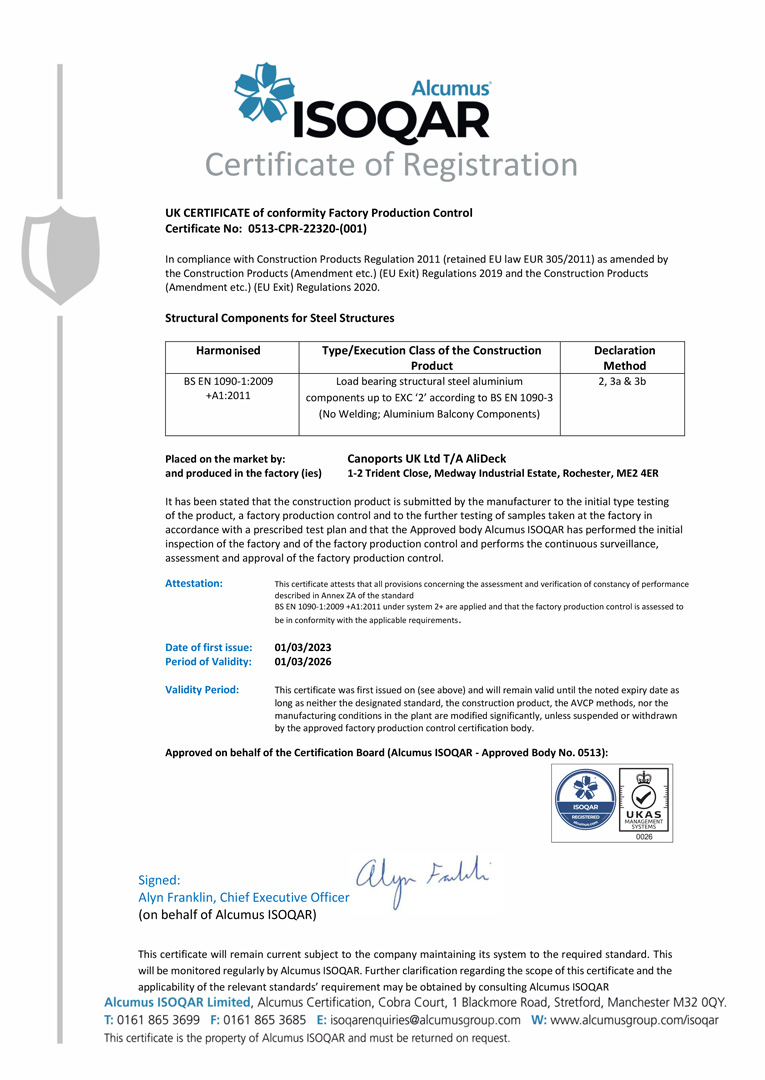
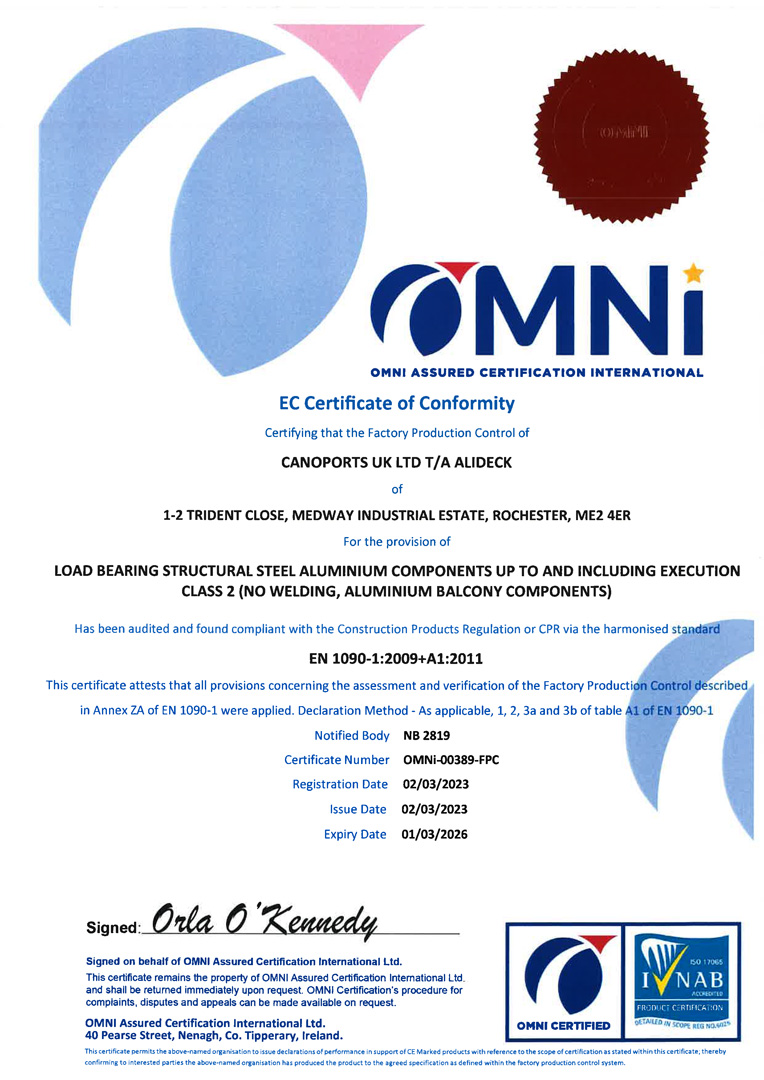
AliDeck’s aluminium decking achieves A2-s1, d0 classification, the gold standard for fire performance. This is not merely a technical specification, it is a commitment to resident safety and a key differentiator in the post Grenfell market. Our products have been independently tested and certified to meet these stringent requirements.
This achievement reflects our commitment to quality and safety. When specifiers choose AliDeck, they are choosing materials that meet the highest fire safety standards and provide genuine protection for building residents.
Real-World Impact: The Walthamstow Stadium Case Study
One of our most significant fire safety projects in 2025 was the transformation of Walthamstow Stadium. The stadium’s existing balcony and terrace systems posed fire safety risks and required urgent remediation to meet modern fire safety standards.
The Cost of Non-Compliance: Why Fire Safety Matters
Building owners and developers sometimes view fire safety compliance as a cost burden rather than an investment. However, the cost of non-compliance far exceeds the cost of compliance.
Regulatory Penalties
Non-compliance with fire safety regulations can result in severe penalties, including:
- Enforcement notices from building control bodies
- Prohibition notices that prevent building use
- Criminal prosecution for building control breaches
- Unlimited fines for Building Safety Act violations
- Up to 2 years imprisonment for serious breaches
- Daily fines that continue to accrue for ongoing non-compliance
Insurance and Liability Issues
Buildings with non-compliant fire safety systems may face:
- Insurance denial – Insurers may refuse to cover buildings that do not meet fire safety standards
- Premium increases – Insurance costs can increase significantly for non-compliant buildings
- Liability exposure – Building owners face significant liability if a fire occurs and non-compliant systems are found to have contributed to the incident
Resident Safety and Peace of Mind
Most importantly, non-compliance puts residents at risk. The cost of non-compliance is ultimately measured in human terms, the safety and wellbeing of building occupants. By investing in fire-safe balcony systems, building owners provide genuine peace of mind for residents and demonstrate a commitment to safety.
Choosing Fire-Safe Balcony Systems: What Specifiers Need to Know
For architects, specifiers, and developers, choosing fire-safe balcony systems requires careful consideration of several factors.
Material Selection
The first consideration is material selection. Non-combustible materials like aluminium are the obvious choice for fire-safe systems. However, not all aluminium systems are created equal. When specifying, ensure that:
- The material is independently tested and certified to A2-s1, d0
- The manufacturer provides comprehensive technical documentation
- The system meets relevant standards (PAS 9980, NHBC, BS 6180)
- The manufacturer has a track record of successful projects
Comprehensive System Design
Fire safety is not just about the decking material, it encompasses the entire balcony system, including balustrades, soffits, drainage, and connections. A comprehensive fire-safe system ensures that all components work together to provide genuine protection.
AliDeck’s complete product range includes fire-rated decking, balustrades, soffit systems, and drainage solutions. By specifying a complete system from a single manufacturer, specifiers can ensure consistency, compatibility, and comprehensive fire safety.

Early Collaboration and Technical Support
Early collaboration with the balcony system manufacturer is critical. By engaging AliDeck at the design stage, specifiers can:
- Optimise the design for fire safety and cost-effectiveness
- Identify potential issues before they become problems
- Ensure compliance with all relevant standards
- Access comprehensive technical support and documentation
Our architectural support service provides specifiers with the guidance they need to specify fire-safe balcony systems confidently.
Installation and Quality Assurance
Fire safety is only as good as the installation. Specifying a fire-safe system is pointless if it is not installed correctly. When selecting a balcony system, ensure that:
- The manufacturer has an approved installer network
- Installers receive comprehensive training on fire safety requirements
- Quality assurance processes are in place to verify compliance
- The manufacturer provides warranties that cover fire safety performance
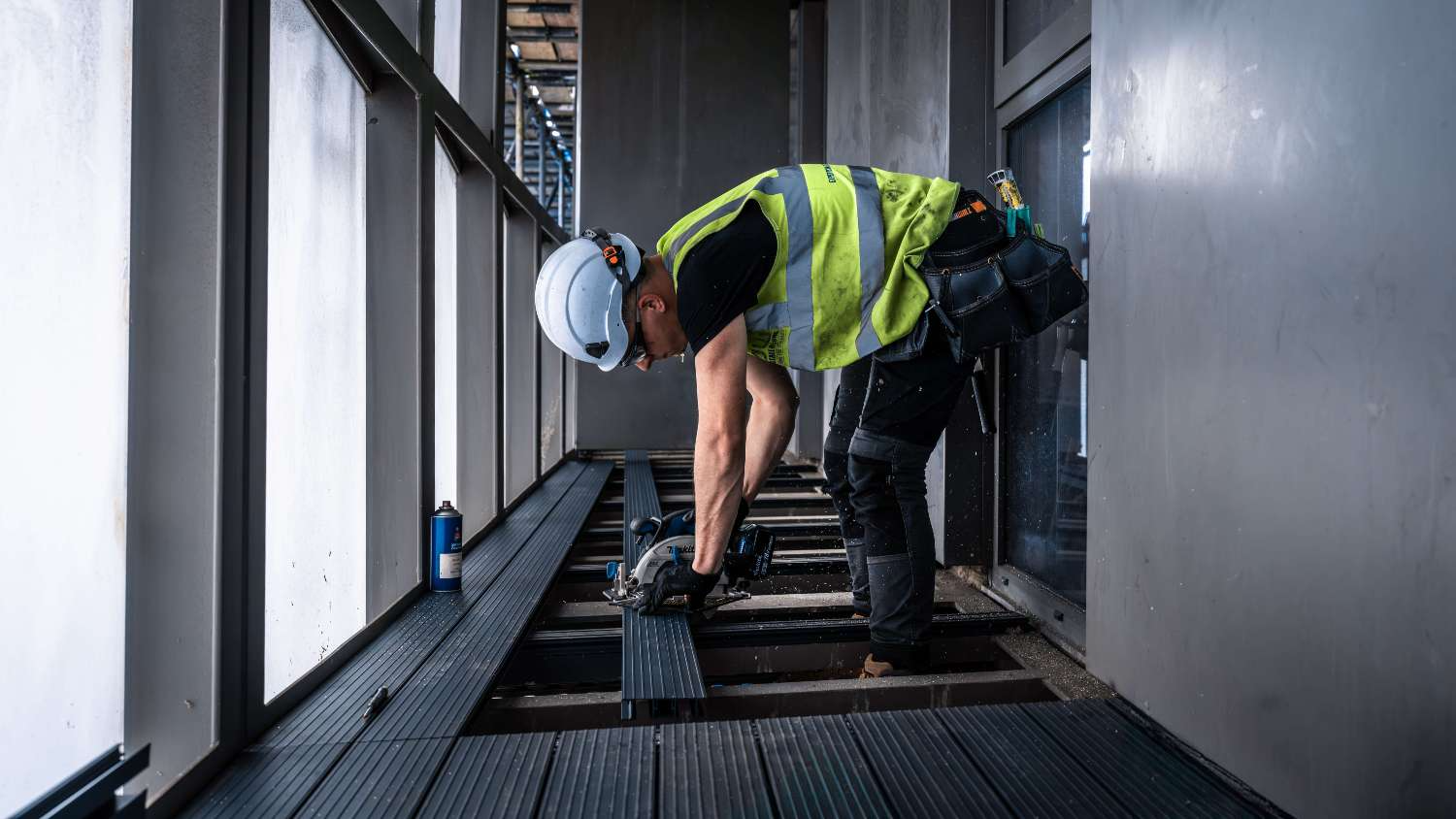
Our Approved Installer Programme ensures that only trained, qualified professionals install AliDeck systems, providing specifiers and building owners with confidence that their fire-safe systems have been installed correctly.
The Future of Fire-Safe Construction
As we move forward, fire safety will continue to be a central consideration in building design and construction. Regulatory requirements will likely become more stringent, and the market for fire-safe materials will continue to grow.
AliDeck is committed to leading this market. Our investment in fire-safe product development, our QUALICOAT accreditation, and our track record of successful projects position us as the partner of choice for specifiers and developers who are committed to genuine fire safety.
For deeper insights into specific topics, we are publishing a series of in-depth articles covering key topics:
- Understanding PAS 9980:2022 – The Essential Guide to Balcony Compliance (Coming Soon) – Deep dive into compliance standards
- Why Aluminium is the Best Material for Modern Balcony Systems (Coming Soon) – Material science and durability
- The AliDeck Installation Process: From Specification to Project Completion (Coming Soon) – Installation best practices
- Navigating the 2029 Compliance Deadline: Your Remediation Roadmap (Coming Soon) – Remediation guidance

Conclusion: Fire Safety as a Commitment to Residents
Fire-safe balcony systems are not a luxury, they are a necessity in modern construction. By choosing non-combustible materials and working with experienced partners, building owners, developers, and specifiers can ensure that their projects meet the highest fire safety standards and provide genuine protection for building residents.
The modern regulatory landscape has fundamentally changed how we think about fire safety in construction. Non-combustible materials are now the standard, and building owners who fail to comply with fire safety regulations face significant regulatory, financial, and reputation risks.
AliDeck is committed to supporting this transition. Our fire-safe balcony systems, our technical expertise, and our track record of successful projects position us as the partner of choice for anyone committed to genuine fire safety. Learn more about how AliDeck meets fire requirements.